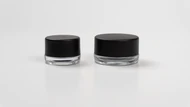
Quick answer: One gram of concentrate commonly fits in both small-format 3ml/5ml-style jars and larger 7ml–9ml-style jars. The best choice usually depends less on whether the product fits and more on how the brand wants to balance headspace, product access, closure size, branding area, portability, hand feel and shelf presence.
Because one gram measures mass, not volume, there is no single milliliter size that every one-gram concentrate SKU should use.
Smaller-format strategy
- less unused headspace
- more compact package
- easier portability
- less packing-table and storage space
Larger-format strategy
- more room around the product
- more branding and compliance area
- larger closure
- more substantial package feel
Does 1 Gram Equal 1ml?
No. A gram measures mass. A milliliter measures volume.
The physical volume of a concentrate can vary depending on density, consistency, air inclusion, crystal structure, sauce content, temperature and how the product is deposited into the jar.
A gram of rosin may occupy a different volume than a gram of diamonds in sauce. Even two batches of the same general concentrate type can fill a jar differently.
A useful way to think about the relationship is:
Unless you know the actual density of the product being packaged, that equation does not give you a reliable jar specification.
The practical solution is simpler: test the actual concentrate in the actual jar.
If you are choosing packaging for a one-gram SKU, evaluate the product fill, remaining headspace, product access, closure, labels and outer packaging—not the ml number alone.
For a broader comparison of common concentrate jar formats, see our 3ml vs. 5ml vs. 7ml vs. 9ml concentrate jar size guide.
Is a 3ml Jar Big Enough for 1 Gram of Concentrate?
Often, yes. A compact 3ml jar can be a practical one-gram concentrate package when the product fits comfortably and remains easy to access.
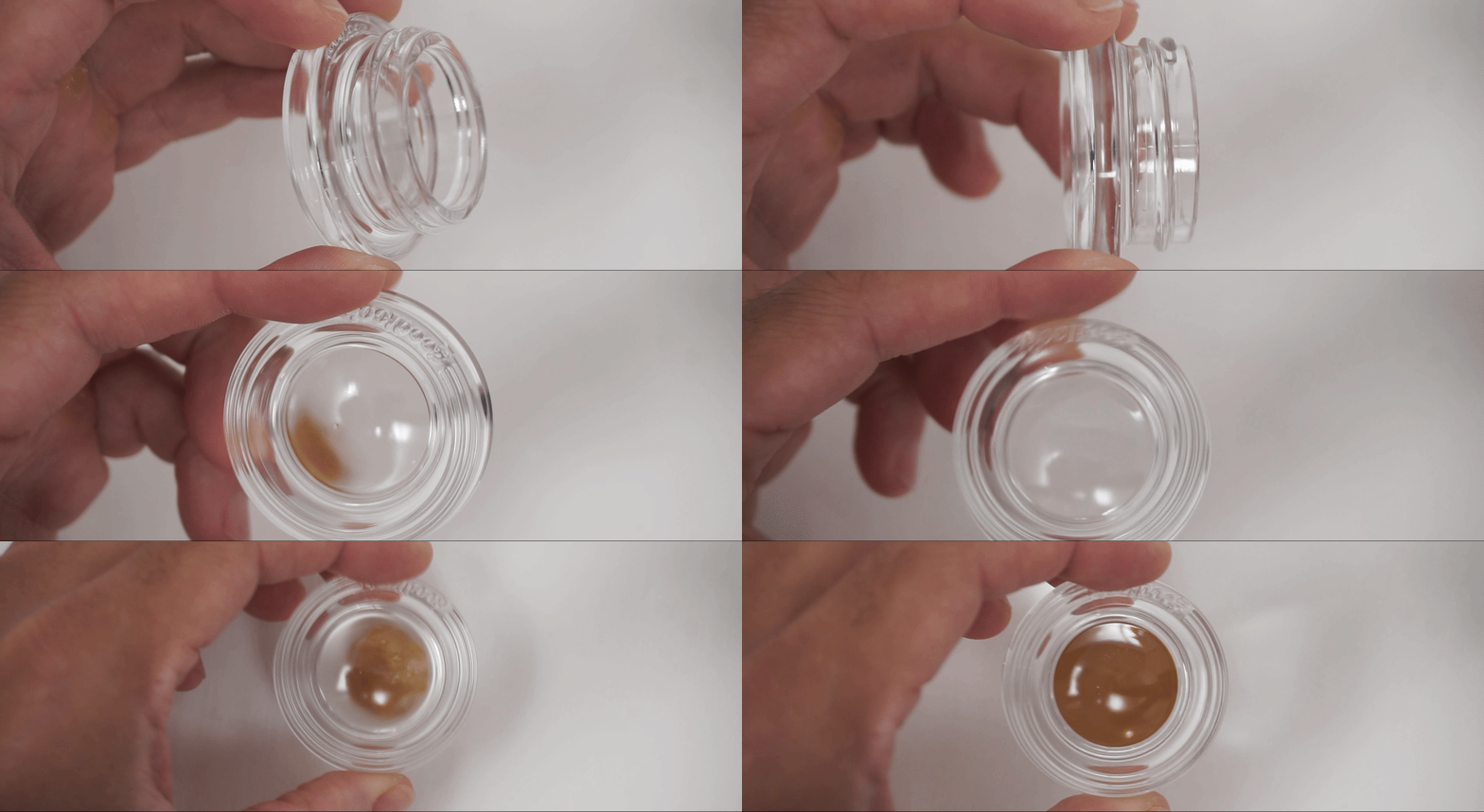
The Goodlook® Mini 3ml glass concentrate jar was designed around this kind of compact use case. Depending on product density and consistency, Mini can be suitable for approximately a one-gram fill.
Mini also includes the Goodlook® patent-pending magnifying base, molded into the geometry of the glass itself. That gives brands an additional product-presentation feature without requiring a separate lens, insert, coating or optical component.
Why choose a compact jar for 1 gram?
- Less unused internal volume
- Less headspace around the same fill
- Tighter product-to-package ratio
- Compact finished package
- Less component storage space
- Less packing-table space
- Easy tray and bin staging
- Easy portability
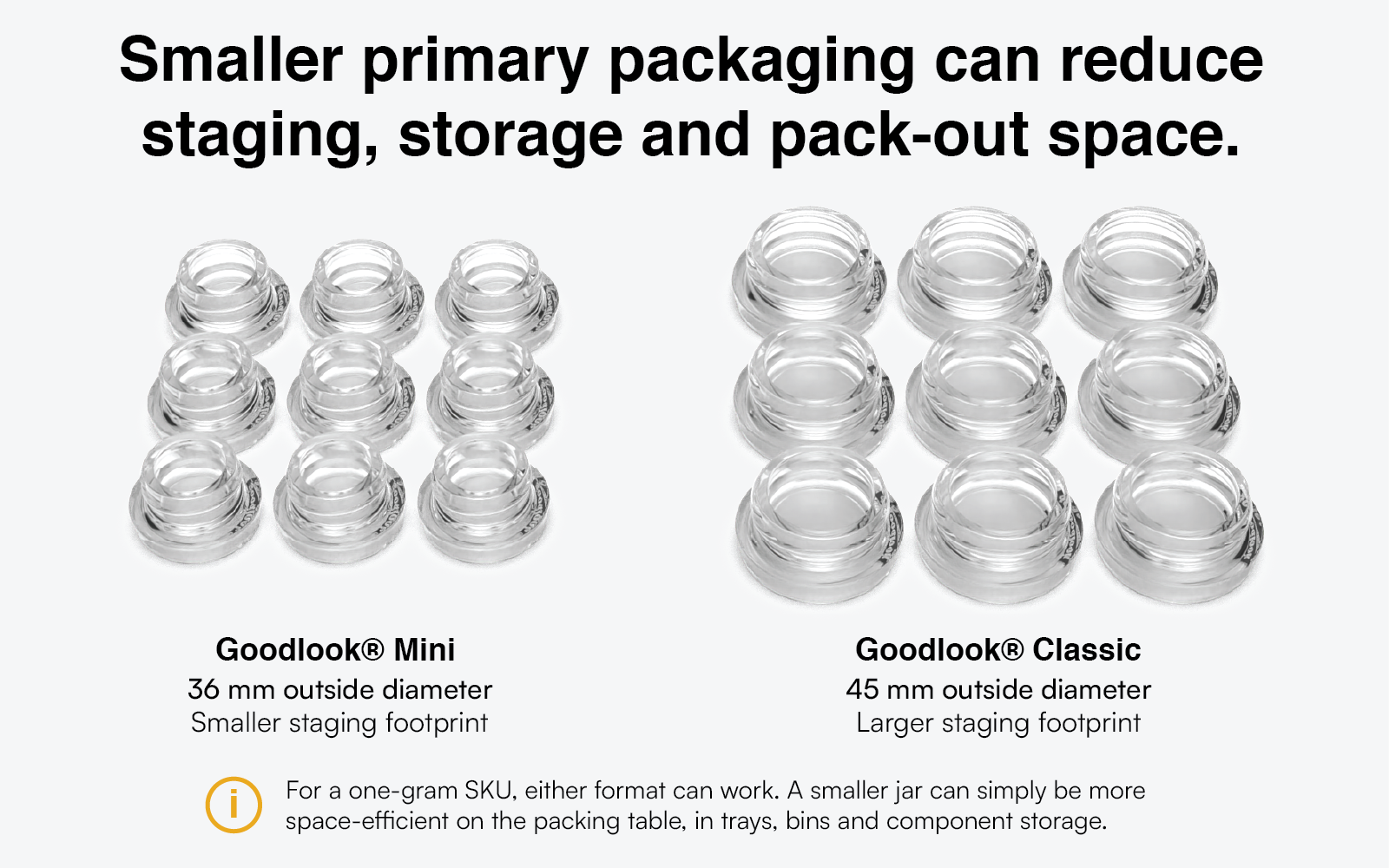
Those production-floor advantages are easy to overlook. Before a jar ever reaches a retail shelf, it has to be stored, staged, filled, capped, labeled, packed and shipped.
Why Do Some Brands Use 3ml or 5ml-Style Jars for 1 Gram?
A smaller-format concentrate jar has a long-established place in one-gram packaging.
A brand may already have closures, labels, inserts, cartons, filling procedures and supplier relationships built around a familiar small-format footprint.
Operational reasons
- compact staging
- less component storage volume
- efficient workbench use
- smaller finished package
Packaging reasons
- less unused headspace
- familiar closure ecosystem
- existing labels and cartons
- portable package feel
Why Do Some Brands Use 7ml, 8ml or 9ml Jars for 1 Gram?
Because one gram commonly fits in those formats too—and some brands simply prefer the larger package.
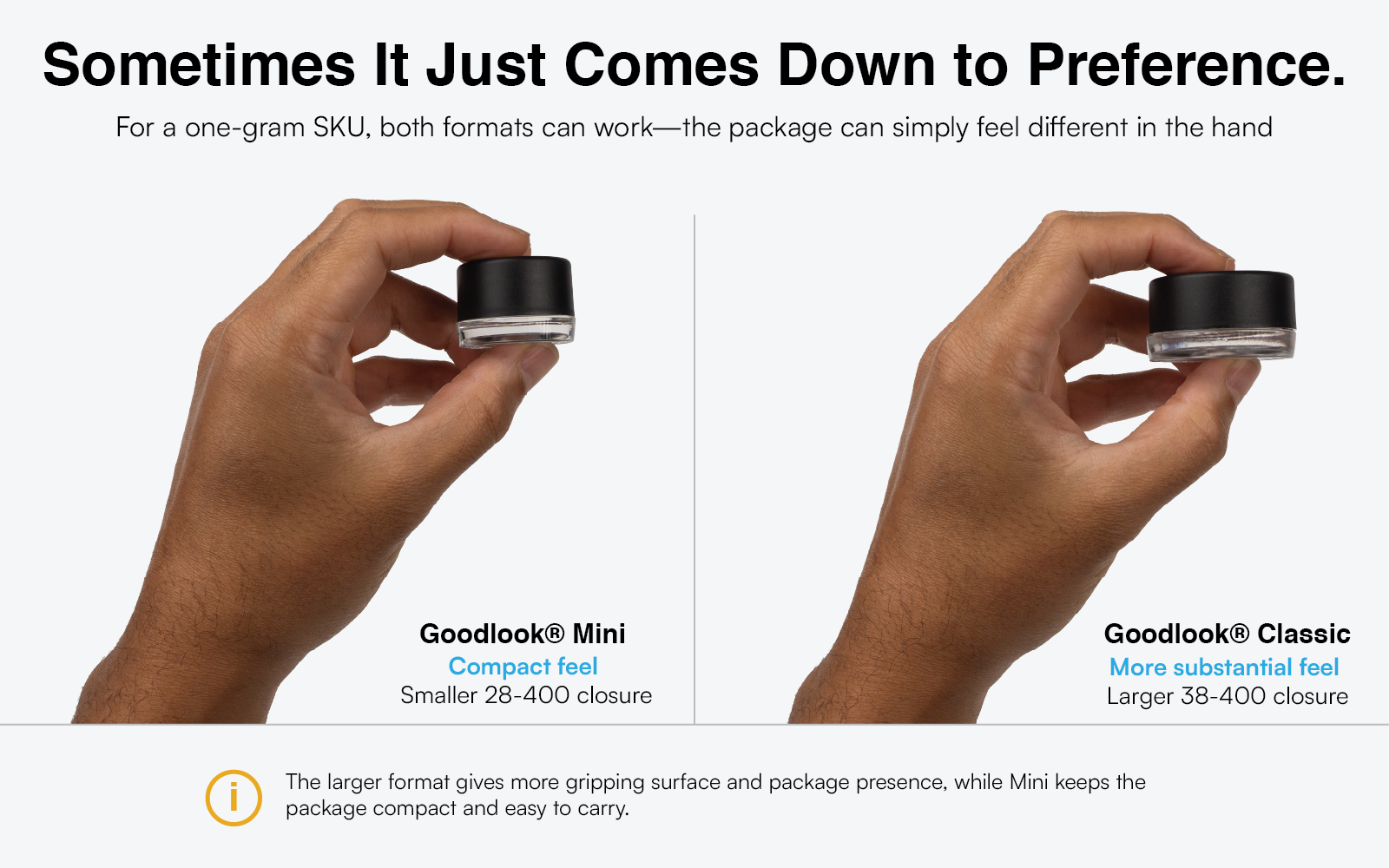
Sometimes it just comes down to preference
A larger jar may feel more substantial in the hand, create stronger shelf presence, better match the rest of a brand's product line or simply look better to the people designing the package.
For a one-gram fill, personal and brand preference can legitimately be the deciding factor.
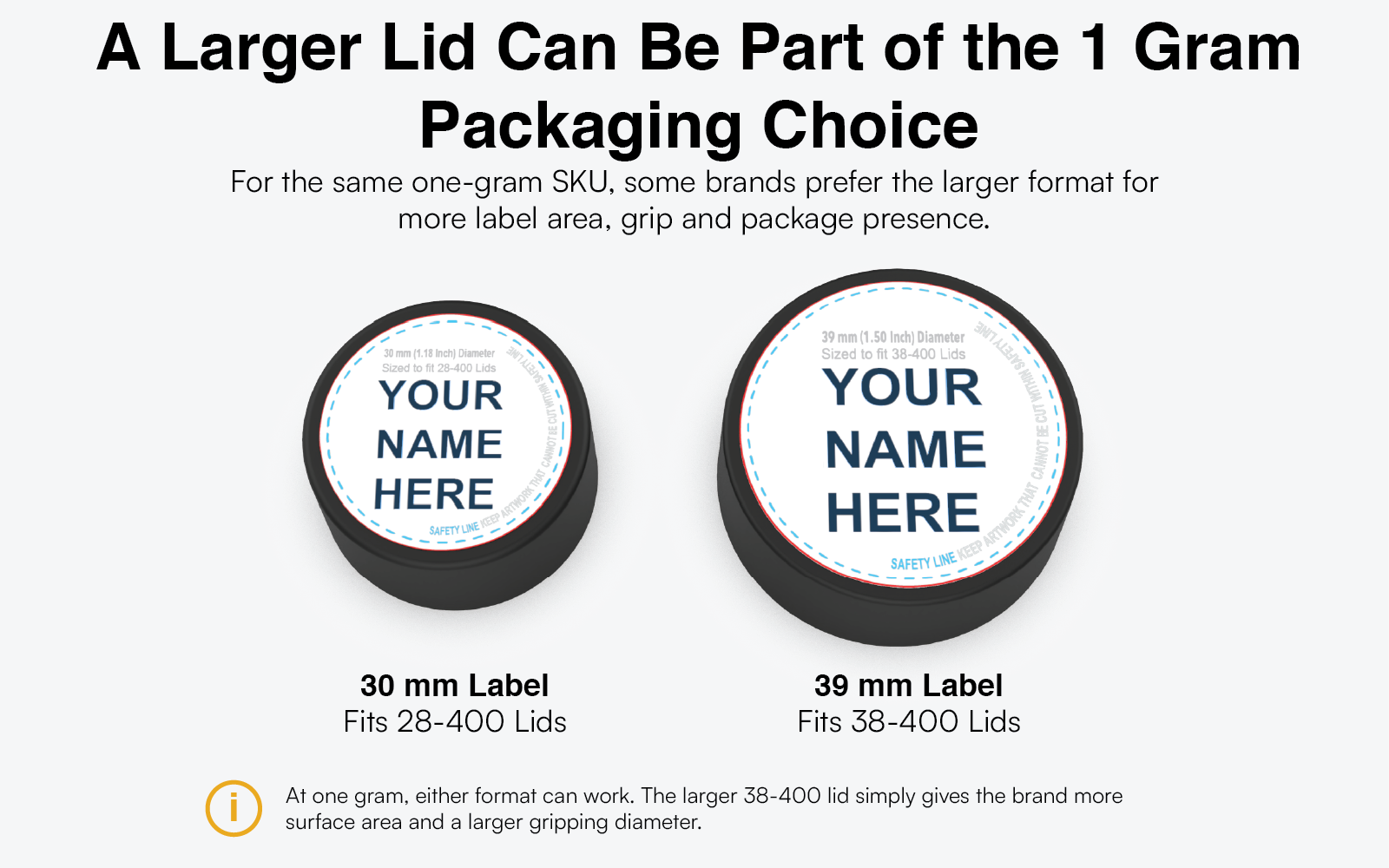
More branding and required-information space
A larger jar and closure can provide more room for logos, product names, variety information, batch information, universal symbols, warnings, testing references and other jurisdiction-specific required copy.
This can matter especially when the primary package needs to carry most of the information without relying on an outer carton.
Product access can matter too
For some concentrates, the larger cavity and mouth opening can make the package more comfortable to use even when a smaller jar technically has enough capacity.
This can be especially relevant for diamonds, diamonds in sauce, sauce-rich products, larger crystals and concentrates where the customer benefits from more room to work with a tool.
Where Goodlook® Classic 8ml Fits
The Goodlook® Classic 8ml glass concentrate jar is Makerbaus's interpretation of the common larger 7–9ml concentrate-jar packaging class.
The 8ml capacity should not be treated as a universal industry “sweet spot” between 7ml and 9ml.
For a one-gram SKU, the extra capacity may not be necessary for fit. It may be intentional because the brand wants a larger lid, more branding area, more room around the product, easier access, stronger package presence or the 38-400 closure ecosystem.
Classic also carries the same Goodlook® patent-pending magnifying-base design as Mini, so brands can choose between compact and larger-format packaging without giving up the Goodlook product-viewing feature.
How the Goodlook® Magnifying Base Fits Into the Decision
Jar size should still be chosen around the product and the packaging strategy.
The magnifying base does not make a 3ml jar inherently better than an 8ml jar, and it does not change the fundamental tradeoffs between headspace, access, branding area, closure size and package footprint.
Instead, it is a differentiator shared by both Goodlook formats.
Built into the glass
The magnifying effect comes from the shape of the molded glass base. There is no separate lens, optical insert, coating or added component to assemble.
Shared across both formats
Mini and Classic can solve different packaging needs while retaining the same core Goodlook® product-viewing concept.
What Happens When You Put 1 Gram in a Larger Jar?
The most obvious difference is headspace—the unfilled volume inside the package after the concentrate has been added and the jar has been closed.
If the same one-gram fill is placed into a compact jar and a larger jar, the larger jar will generally leave more unused internal space.
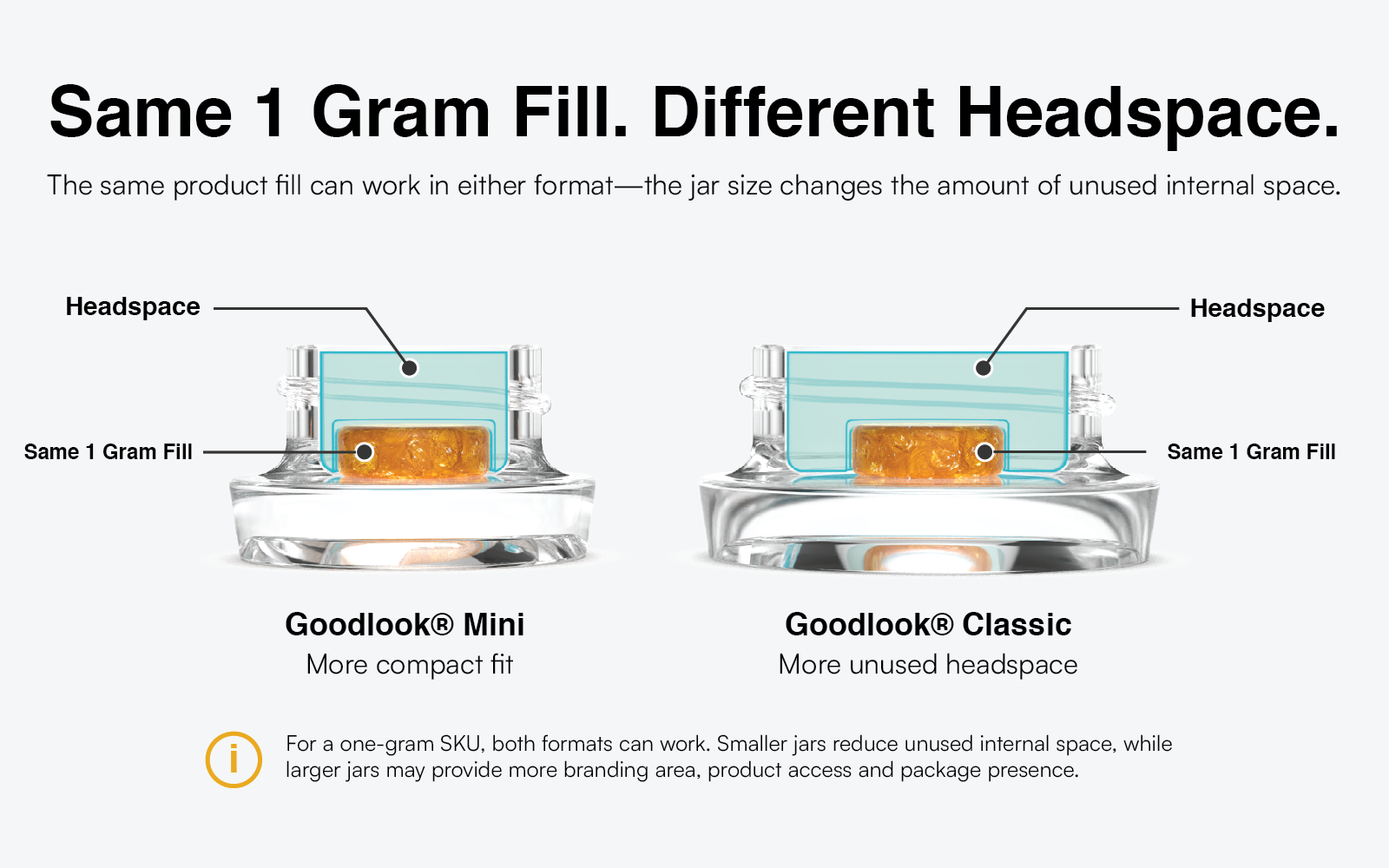
If both jars are capped with ambient air under the same conditions, the larger headspace contains a larger volume of air and therefore a larger initial amount of oxygen.
Oxygen can participate in oxidative changes affecting cannabinoids and terpenes during storage, although it is only one factor among many.
Is Less Headspace Always Better?
No. Headspace is one packaging variable, not the entire packaging decision.
A compact jar may reduce unused air space, while a larger jar may provide benefits the brand values more:
- More label surface
- More product access
- Larger closure
- Greater shelf presence
- More substantial hand feel
- Room for larger crystals
- Compatibility with an existing packaging family
The goal is not to minimize one variable at all costs. It is to choose the package that creates the best overall product experience.
Does Concentrate Type Change the Best Jar Size?
It can. The same one-gram weight can behave very differently depending on the concentrate.
| Concentrate format | One-gram packaging considerations |
|---|---|
| Rosin | Headspace, access and presentation |
| Live resin | Headspace, sauce movement and liner/seal interaction |
| Badder / budder | Tool access and cavity geometry |
| Diamonds | Crystal size and mouth opening |
| Diamonds in sauce | Crystal dimensions, sauce fraction and room to access product |
| Wax | Fill shape and product access |
| Hash | Physical volume and desired presentation |
These are considerations, not rigid prescriptions.
Even when a one-gram fill technically fits in a compact jar, some users may prefer more room for diamonds, sauce-rich products or larger crystal structures. A larger opening and cavity can simply provide more working room.
3ml / 5ml-Style vs. 7ml / 8ml / 9ml-Style for 1 Gram
| Decision factor | Compact 3ml / 5ml-style | Larger 7ml / 8ml / 9ml-style |
|---|---|---|
| 1g compatibility | Commonly used; test actual fill | Commonly used; test actual fill |
| Headspace | Generally less | Generally more |
| Portability | More compact | Larger footprint |
| Packing-table space | Less | More |
| Branding area | Less | More |
| Product access | More compact cavity | More room around product |
| Closure size | Often smaller | Often larger |
| Hand feel | Compact / lightweight | More substantial |
| Typical priority | Compactness, headspace, portability, packing efficiency | Branding, access, hand feel, presence, larger closure |
Goodlook® Mini vs. Goodlook® Classic for a 1 Gram SKU
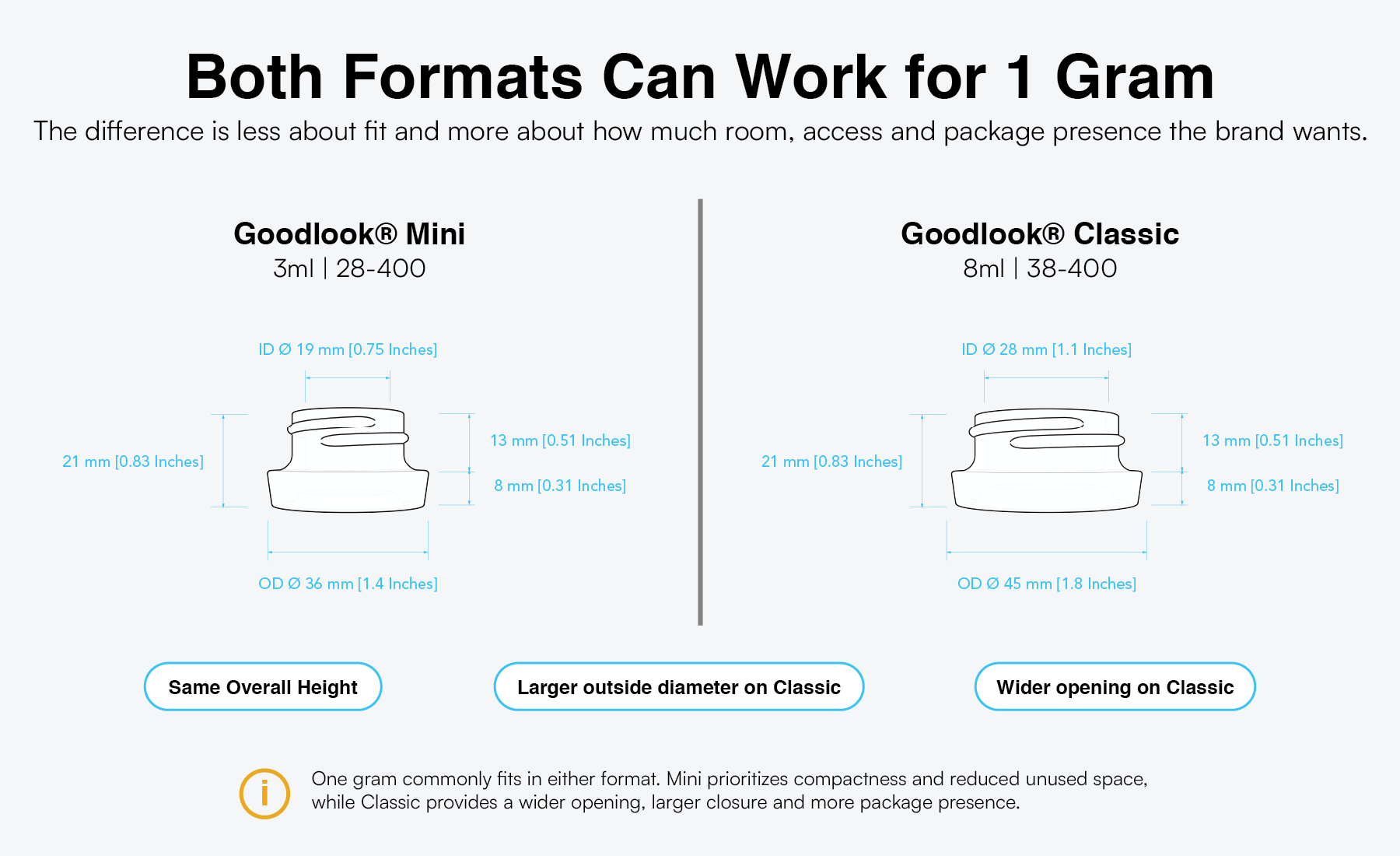
Choose Goodlook® Mini when you want...
- a compact 3ml cavity
- less unused headspace
- a smaller package
- efficient storage and packing-table use
- a 28-400 closure system
- easy portability
- the patent-pending Goodlook magnifying base
Choose Goodlook® Classic when you want...
- the larger 7–9ml-style footprint
- an 8ml nominal cavity
- more label and branding area
- a larger 38-400 closure
- more room around the concentrate
- stronger shelf presence
- a more substantial package feel
- the same Goodlook magnifying-base feature
For a one-gram SKU, Classic has more internal capacity than many fills require. That does not mean it is the wrong package. It means the brand is choosing the larger-format packaging experience instead of optimizing only for internal-volume efficiency.
What If You Package More Than 1 Gram?
This is where the recommendation starts to change.
At exactly one gram, both smaller and larger concentrate jars are common, and preference can legitimately drive the choice.
As the fill moves above one gram, the larger-format jar generally becomes more practical.
More capacity
The extra internal volume becomes increasingly useful as physical fill size increases.
More access
A wider opening and larger cavity can help with multi-gram fills, larger crystals and tool access.
Goodlook Classic's 8ml cavity is therefore relevant not only for brands that prefer a larger one-gram package, but also for brands that want flexibility for larger fill weights.
Don't Ignore the Rest of the Packaging System
A jar is only the first component.
A change in jar size can affect closure diameter, lid-label size, tamper-evident labeling, insert fit, carton fit, artwork layout and packing procedure.
If closure size is part of the decision, our 28-400 vs. 38-400 closure guide explains the neck-finish, label-area, and compatibility differences between the two systems.
If liner and seal behavior are part of the package decision, our guide to foil vs. foam vs. PTFE concentrate jar liners explains the product-contact surfaces, compression backings, first-open seals, and reclosure differences between common liner systems.
Primary packaging
Branding & secondary packaging
One useful feature of the current Makerbaus concentrate-box system is that the outer carton dimensions can remain consistent across Mini- and Classic-oriented packages, with inserts adapting the smaller jar footprint where needed.
A Simple 1 Gram Jar Selection Checklist
- Test-fill the actual concentrate
- Check the remaining headspace
- Confirm adequate product access
- Verify the compatible CR closure
- Determine required branding area
- Check label, insert and carton fit
- Order samples before production
Test the complete package
A specification sheet cannot replace a physical packaging test.
Fill it. Cap it. Label it. Box it. Handle it.
Then make the production decision.
Frequently Asked Questions
What ml jar should I use for 1 gram of concentrate?
One gram commonly fits in both compact 3ml/5ml-style jars and larger 7ml–9ml-style jars. The best choice depends on the actual product, headspace, access, closure size, branding requirements and brand preference.
Is 3ml enough for 1 gram of concentrate?
It often can be. Goodlook® Mini is designed around an approximately one-gram use case depending on product density and consistency. Always test the actual concentrate before production.
Is 3ml enough for 1 gram of rosin?
Often, yes, but actual fit varies with product density, consistency and fill geometry. Test the rosin in the actual package.
Is 5ml the standard jar size for 1 gram?
5ml-style jars are common, but they are not the only standard approach. One-gram concentrate SKUs are also routinely packaged in larger 7ml–9ml-style footprints depending on the brand.
Can I put 1 gram in a 7ml jar?
Yes. A larger jar can be an intentional choice for more branding area, product access, closure size or package presence.
Can I put 1 gram in an 8ml jar?
Yes. Goodlook® Classic uses an 8ml cavity within the common larger 7–9ml packaging class. It can be an intentional one-gram package when the brand wants the benefits of the larger format.
Can I put 1 gram in a 9ml jar?
Yes. It will generally leave more unused internal space than a compact format, but many brands intentionally choose larger jars for one-gram SKUs.
Is a smaller or larger jar better for exactly 1 gram?
Neither is universally better. At one gram, both formats are common. The choice often comes down to headspace, branding, hand feel, product access, portability, packing-table efficiency and brand preference.
What if I package more than 1 gram?
As fill weight increases above one gram, the larger-format jar generally becomes the more practical choice because the additional capacity and product access become increasingly useful.
Is less headspace better for concentrates?
Reducing unnecessary headspace reduces the amount of ambient gas initially enclosed when packages are filled under the same conditions. But preservation also depends on seal quality, temperature, light, storage time, permeability and product composition.
What size jar is best for diamonds in sauce?
There is no universal answer, but a larger cavity and mouth opening can be useful for large crystals and sauce-rich products because the customer has more room to access the concentrate.
Does a larger concentrate jar give me more branding space?
Usually yes. Larger jars and closures generally provide more available label surface and more package presence.
Do Goodlook Mini and Classic both have the magnifying base?
Yes. Both Goodlook® Mini and Goodlook® Classic use the patent-pending magnifying base molded into the glass itself. The feature provides a closer visual look at the concentrate without requiring a separate lens or optical insert.
Should I order samples before buying concentrate jars in bulk?
Yes. Test the actual product, closure, label, insert and carton before committing to production quantities.
The Bottom Line
There is no universal “one-gram jar.” One gram of concentrate commonly fits in both compact 3ml/5ml-style jars and larger 7ml/8ml/9ml-style jars.
For exactly one gram, the choice often comes down to preference.
A smaller jar can provide:
- less unused headspace
- a compact package
- easy portability
- efficient packing-table and storage use
A larger jar can provide:
- more product access
- more branding and compliance area
- a larger closure
- a more substantial hand feel
- stronger shelf presence
With Goodlook®, both choices retain the same patent-pending magnifying-base concept, so the size decision can stay focused on packaging strategy rather than sacrificing the core Goodlook product-presentation feature.
For certain products—especially diamonds, diamonds in sauce or larger crystal structures—the end user may appreciate the additional room of a larger jar even when the smaller jar technically has enough capacity.
Once the fill moves above one gram, the larger format generally becomes the more practical recommendation.
Sources & Technical Notes
- Bueno J, Alborzi S, Greenbaum EA. Vapor Phase Terpenes Mitigate Oxidative Degradation of Cannabis sativa Inflorescence Cannabinoid Content in an Accelerated Stability Study. Cannabis and Cannabinoid Research. PMID: 35384716.
- MacLaughlin LL, MacDonald MT. Is nitrogen-modified atmosphere packaging a tool for retention of volatile terpenes and cannabinoids in stored Cannabis sativa inflorescence? Journal of Cannabis Research. PMID: 39707520.
- U.S. Consumer Product Safety Commission — Special Packaging (PPPA) FAQs. CPSC guidance explains the balance between child resistance and adult usability in special-packaging protocols.
Note: these sources support the general storage/oxidation and special-packaging concepts discussed above. They are not package-specific validation of Goodlook® jars or a quantified shelf-life claim. Cannabis packaging and labeling requirements vary by jurisdiction.
Tags: